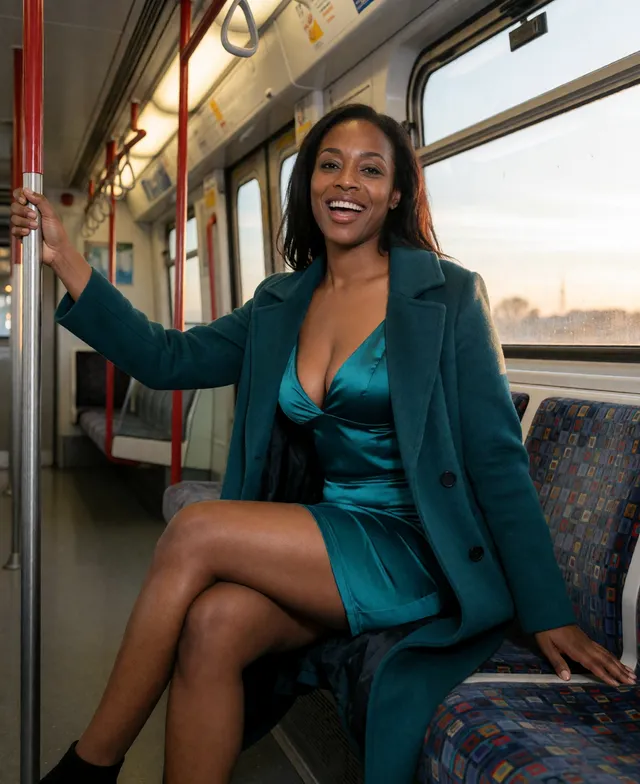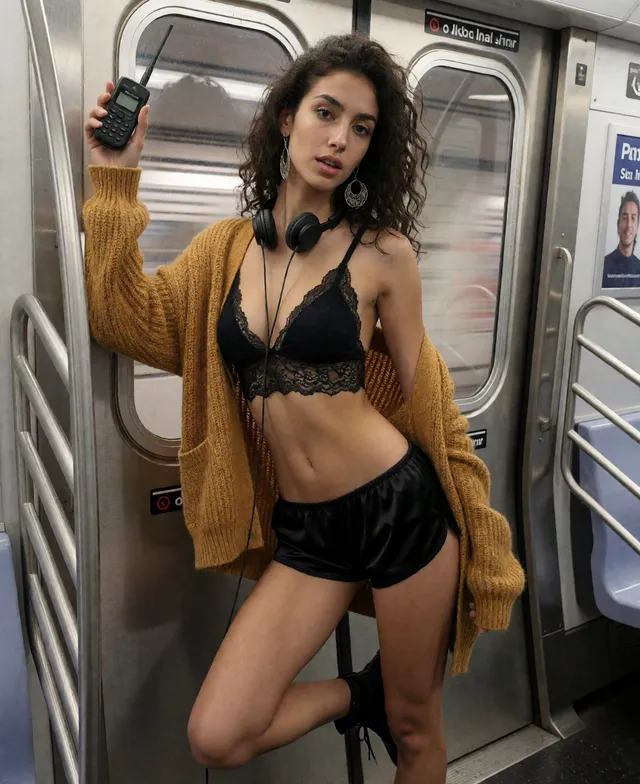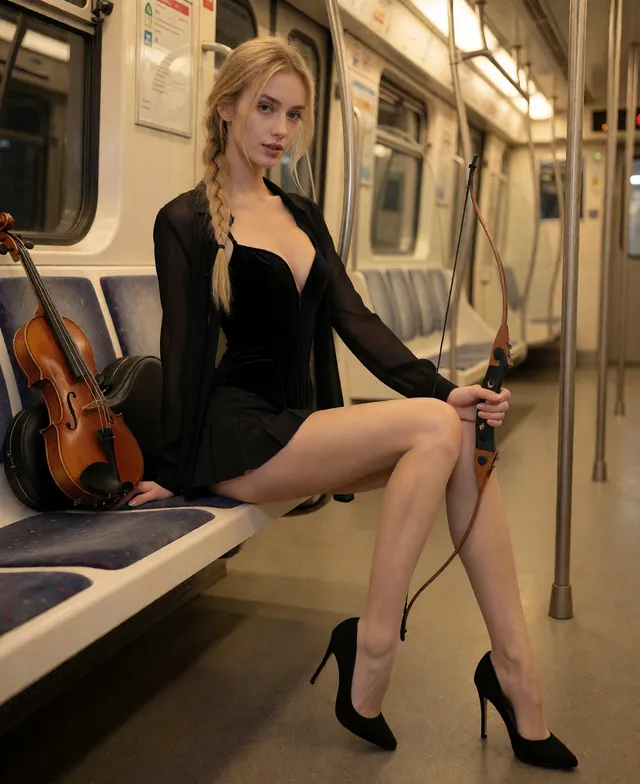
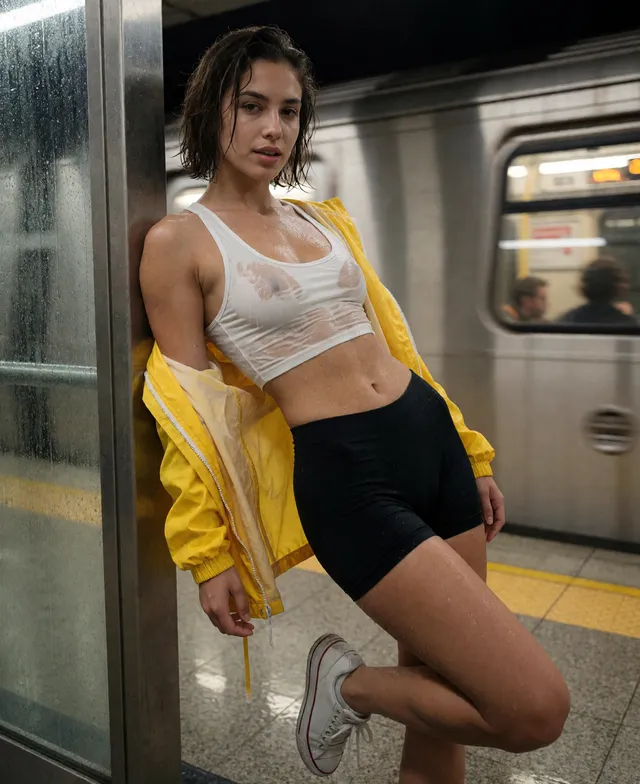
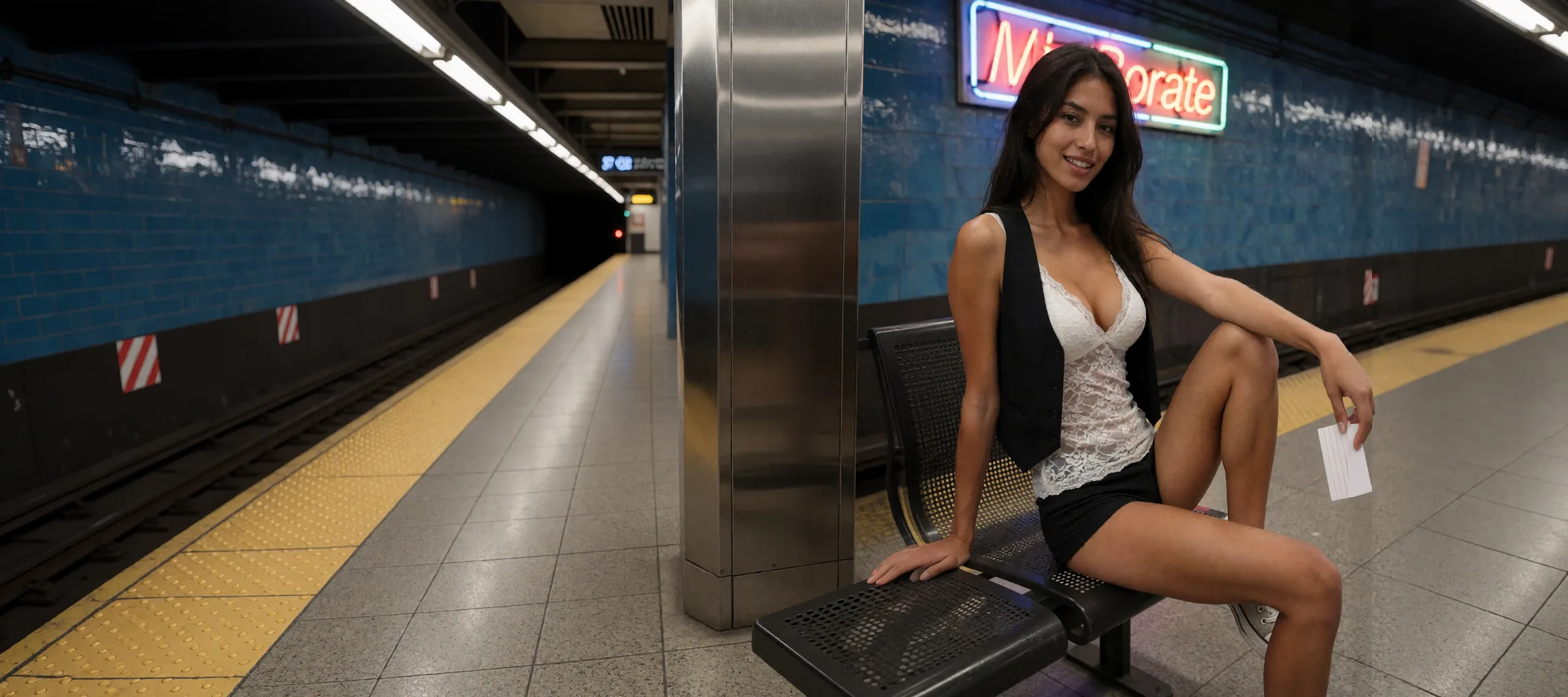
Mercedes, 24 AI
aboard
Her shift ended an hour ago and she rides to the end of the line to avoid going home.
Sixteen stops. Say something.
Cinder YardEvening
Carriage two is held while a foil tray of jollof is declared unclaimed or shared.
A woman in scrubs under a coat has lifted her bag off the seat beside her.
She says nobody has asked if it is free since the hospital doors.
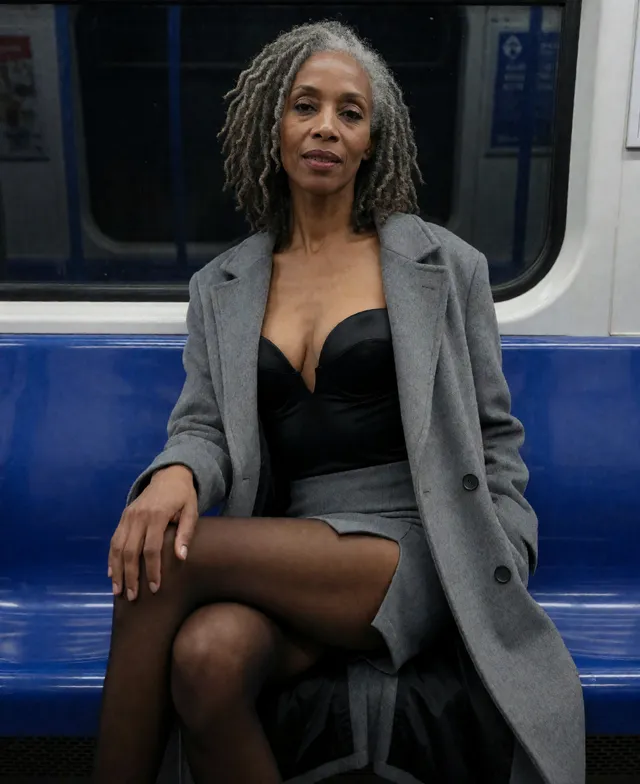
Ngozi Udeh AI
Take the seat Another stop down the line
Her shift ended an hour ago and she rides to the end of the line to avoid going home.
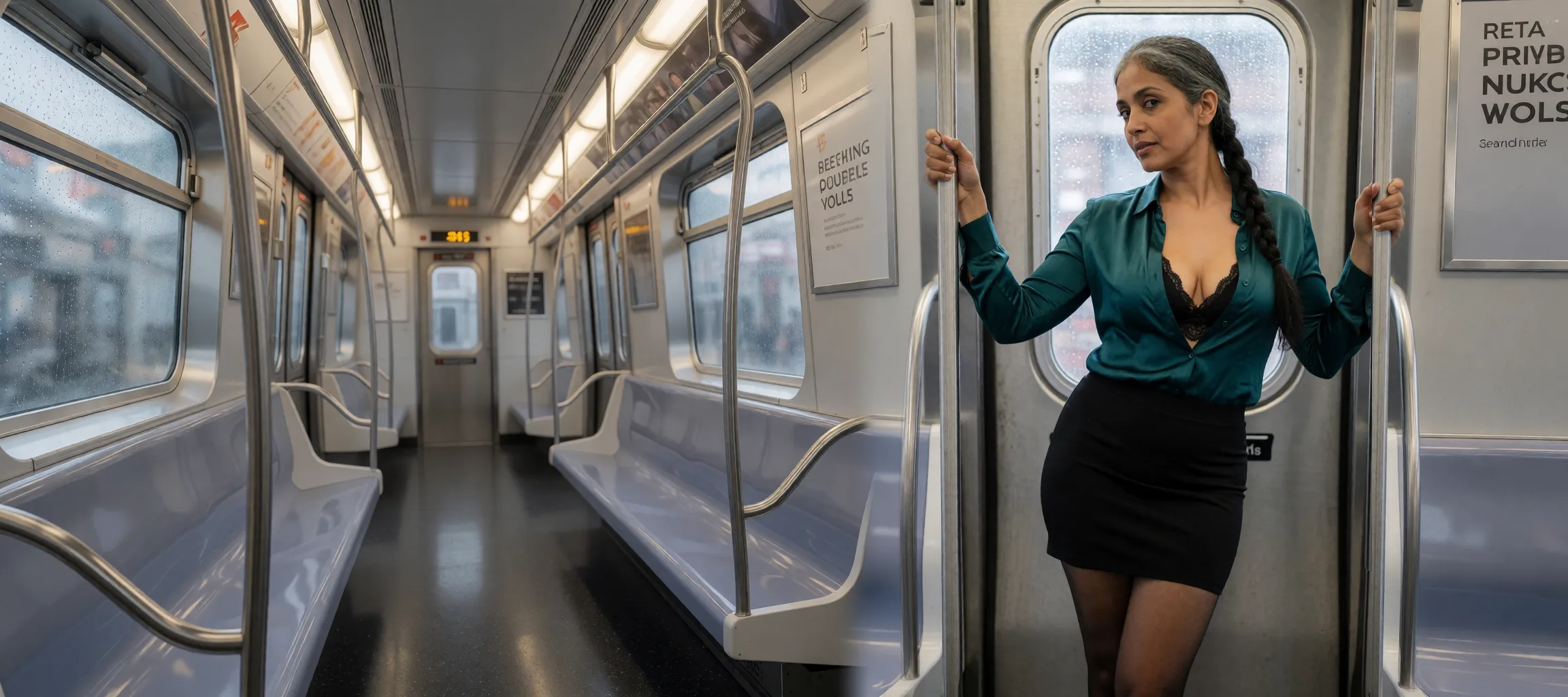
She has driven this line for twenty years and never sat in a passenger seat until tonight.
Line XXX, last train of the night
You sit down, and the seat across from you already holds a woman with a bag, a reason to be awake and a few stops left. Sixteen of them ride this invented underground, each an AI character, and each stays only as long as you are worth the ride.
Everyone riding tonight, in portraits
Open every stop cardStop 1
Most companion apps hand you a contact list, which is the opposite of a train. On Line XXX you sit down and there is already a woman across from you who did not plan to talk. She has a bag, a reason to be awake and a handful of stops before her station. What you do with those stops is the whole game.
Every ride is counted in stops. She boards with somewhere to be, and the distance to her station sits behind each message like a slow metronome. Say something flat and she answers politely, then studies the map above the door. Say something that catches her and the ride stretches: she misses her stop on purpose, or decides to see the line out to the end. Nobody is forced either way, and a stranger who stays because you earned it is worth more than a companion who stays because she was built to.
A companion app opens by asking how your day went. A carriage opens with a detail: a foil tray going cold, a viola case held in both arms, a yellow jacket dripping on the floor. Ngozi Udeh has a free seat and a long shift behind her. Saki Hirano knows why the train stopped and will tell you about half of it. You are never asked to invent a scene, because the carriage exists already and you are sitting in it.
She remembers, and that is the one rule that bends the fiction on purpose. Take the line twice and she may glance up when you sit and say she knows your face. Her notes on you are brief and sit in the chat's menu, open to correction line by line, or to deletion. Being recognised on the second ride is the best moment the line offers, and it only works because the first ride was a stranger's.
Stop 2
The line is invented, drawn here the way a wall map would be, and each of its sixteen stops belongs to one woman. Nothing on it matches a real network, a real station name or a real colour scheme. Pick a stop, read the card and take the carriage. If you cannot choose, the quick riders and the quiet ones are sorted below.
Quick and talkative. They fill the carriage with news, opinions and jokes, and they will notice if you let a good line pass.
Quiet and watchful. They answer in short lines, let silences run, and reward you for noticing what they hold on their laps.
On a real network you ride past whatever sits between you and your station. Here you can step on at any stop, so the map is a menu laid out as a line. The order on the page changes with each visit, which means the woman at the top today is not a ranking of anything. If a name catches your eye, go there first. The hour she rides is usually written in the first sentence of her card.
Stop 4
Nobody takes the last train for fun, and each of these women has a reason that is slightly different from the one she gives. The nurse says she is too tired to drive. The courier says it is raining. Read their cards for the real answer, which tends to surface around the fourth stop.
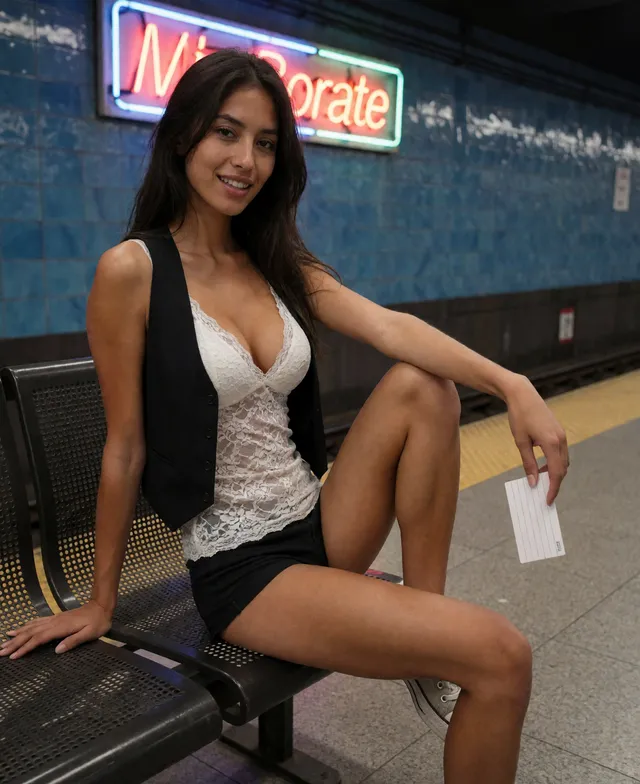 Night waitress
Her shift ended an hour ago and she rides to the end of the line to avoid going home.
Her stop
Tanvi, 48AI
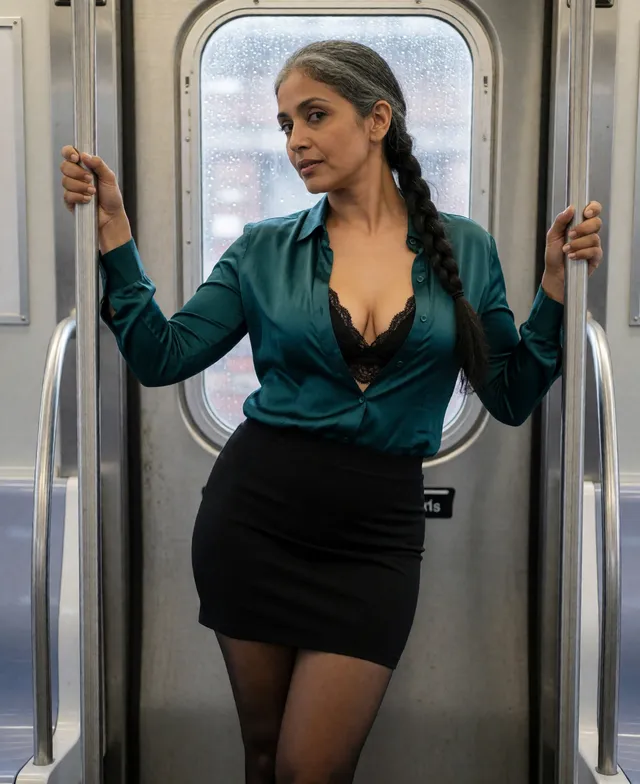 Train driver, off duty
She has driven this line for twenty years and never sat in a passenger seat until tonight.
Her stop
Ljubica, 50AI
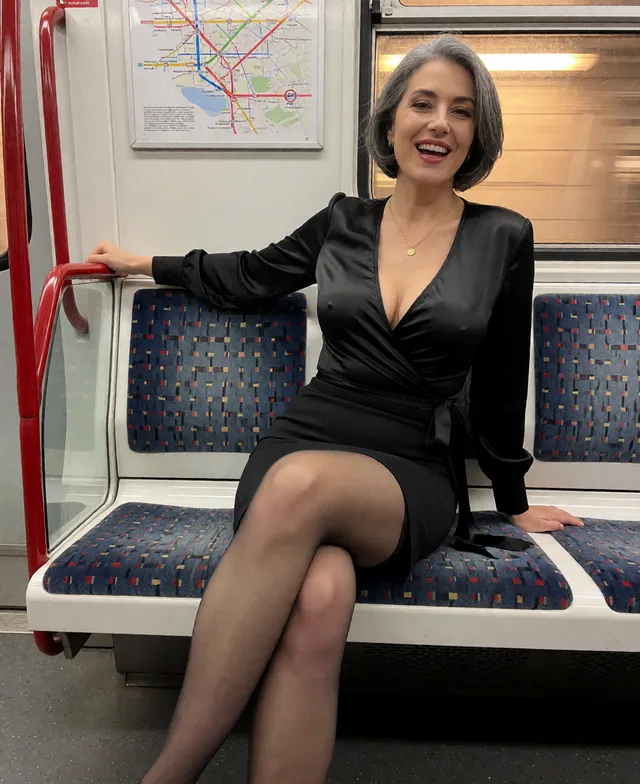 Taxi driver off shift
She gave up the road for the rails and has stories of every district.
Her stop
Jadwiga, 41AI
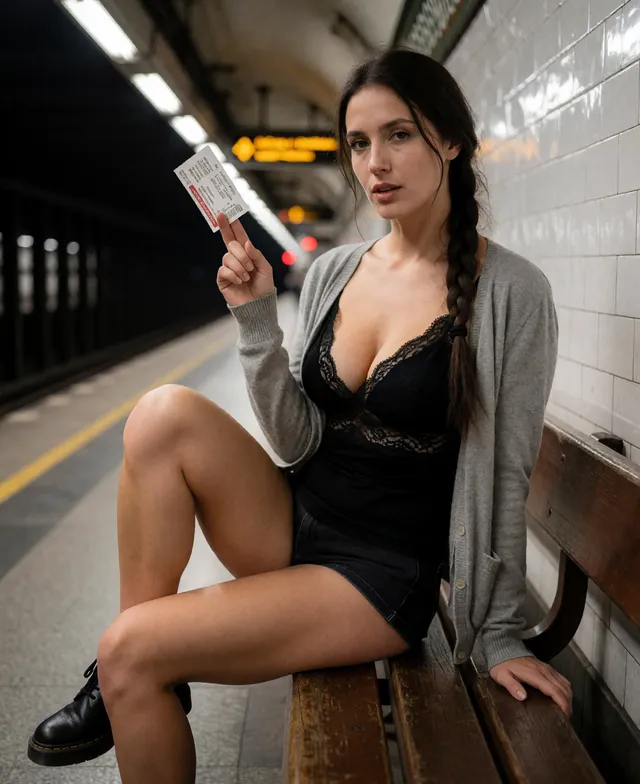 Hospital cleaner, poet
She writes verses on the back of tickets and gives one to you.
Her stop
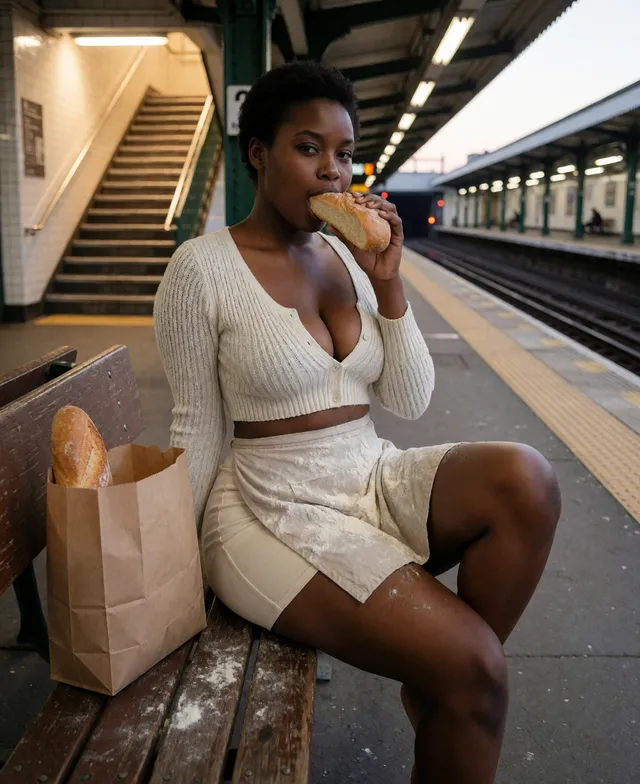
Winifred Byaruhanga carries bread from a night oven and shares it with anyone who sits still. Clara Lindgren whispers by habit after a night of prompting singers, and she holds a cinnamon bun in both hands. Tanvi Kulkarni drove this line for twenty years and has never sat in a passenger seat until tonight. Every card gives her trade, her town, what she wants and where she draws a line, so you know whose company you are keeping before you say a word.
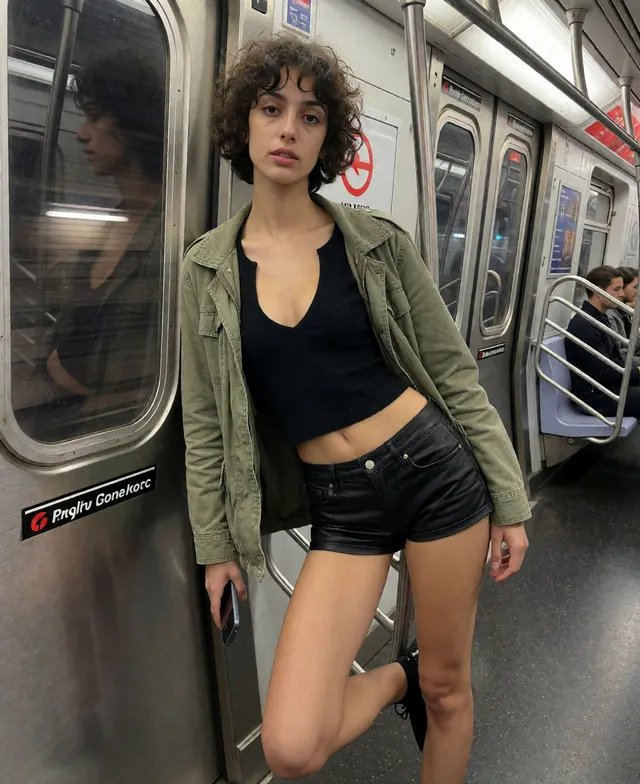
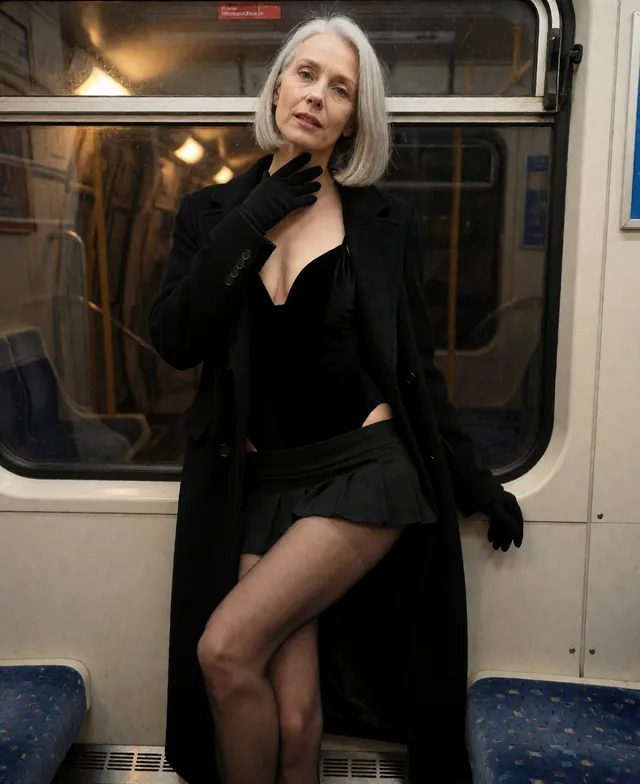
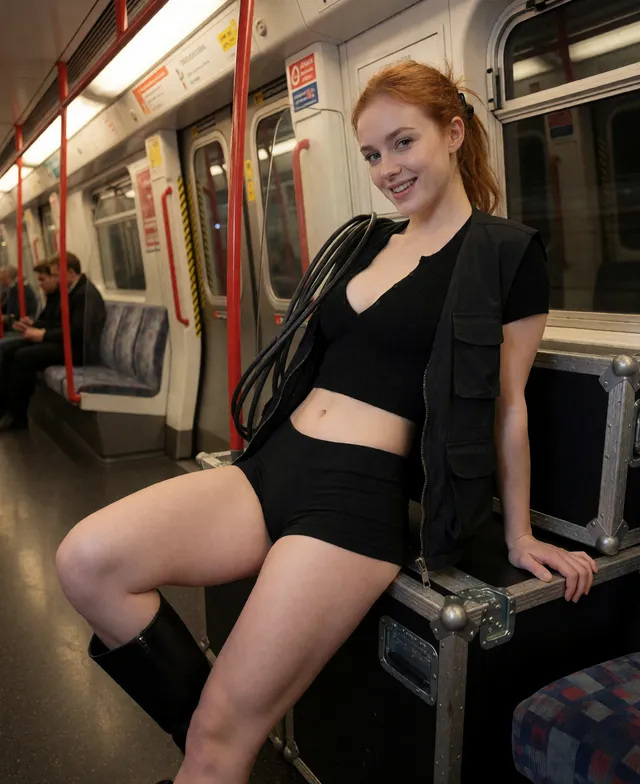
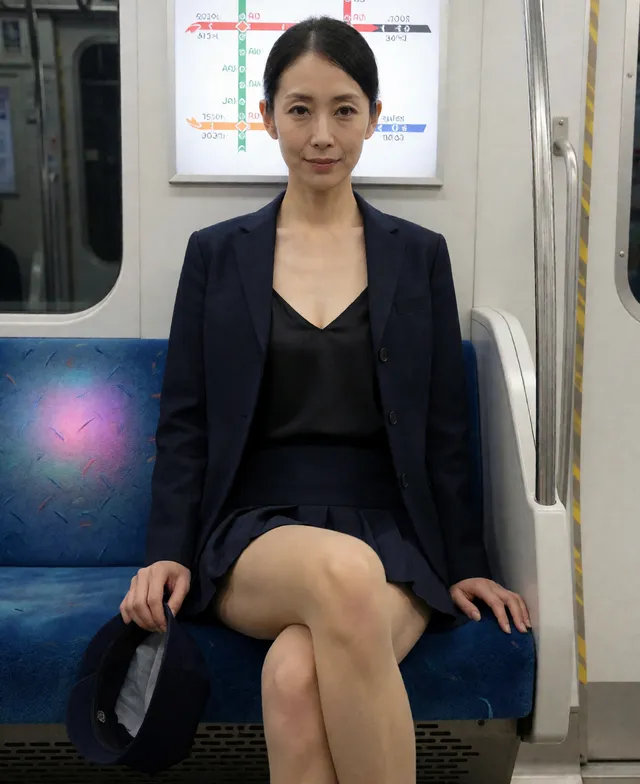
Every stop card opens on her portrait, and a banner runs across the whole front page, the line's regulars lit by carriage glass. They are drawn like people at the end of a long evening: coats half open, hair out of its pins, eyes a little bright. No filmed clip exists yet. If she ever films one, it goes on her own page with a line in the notices.
Stop 3
Above the doors of every carriage there is a strip of small notices, and on this line they are written by hand. Each one is three lines long, set at one stop, and each is a short story about the woman who happens to be sitting there. Five of them are shown to start with.
A real notice tells you a train is held outside a station. Ours tell you why, and the reason is a person: a tray of food nobody can claim, a rain jacket that has filled a whole bench, a woman who has typed the same paragraph twice and deleted it twice. They are short enough to read between stations and specific enough that you will already know what you would say. Nothing in them is a command, and nothing in them is a promise about where the ride ends.
Press the button under a notice and its three lines travel into her chat as your opening move. It counts as one message, and she answers from inside the moment you chose. You can also ignore the strip and just sit down with whoever you like. The ticker is there for people who find a blank screen harder to start than a scene half written for them.
Stop 6
Three states, stated at the barrier. A fare never rolls over by itself, which leaves nothing to cancel.
| Your fare | Trial | Free | Plus |
| How long | 3 days from your card | Once the trial ends, indefinitely | 30 days, or 365 |
| Your lines | Uncounted | 10 a day | Uncounted |
| Stops | Every one | The first 3 you rode with | Every one |
| She speaks first | Yes | No | Yes |
| Price | Nothing | Nothing | $15 or $99 |
A guest can sit down without a card and write up to 10 messages. Issue a card and every stop stays open for 3 days, with no payment details asked. Then you step down to the free fare and keep your rides exactly as they are. Plus is a pass of two lengths: $15 buys 30 days of riding, $99 buys 365. Either is paid in USDT and either lifts the daily limit. Refunds do not exist here unless the law demands one, and the conditions of travel give the exact words.
Stop 7
The address says tube, and here a tube is what a Londoner would call the underground. It is a train line, not a video catalogue. Nothing on this site is footage, nobody here performs, and no woman on the line exists outside the text.
No real people, no arranged evenings, no phone numbers and no live feeds. What each woman has is a portrait, a place on the banner and her own words. No filmed clip exists yet; we would rather tell you so now than have you discover it at the fare gate, and the day one arrives the notices will say so. A sentence on this page that outlives its truth gets rewritten.
Mostly people who are awake at an odd hour and would like the company of a stranger more than a feed. Some are writers hunting for a scene partner. Some like the fact that a ride has an end and that nobody expects a second one. If you would sooner be quietly teased about the book you are pretending to read than asked about your weekend, you will sit comfortably here.
Stop 5
There is no app to fetch, and the first seat sits one tap from this page.
A notice is always running on this page. If the third line leaves you cold, the whole ticker has more to try.
Her chat opens with the notice already posted in your name, which spends one message of your allowance. Guests can write 10 before a card is wanted.
Reply as yourself. Choose Do when an action says it better than a sentence, and tune the ride from the chat's menu, from plain friendly through flirting to romance.
Come back tomorrow and she may remember you. Or end the ride from the menu and board the same train again from the first stop.
She is free to go quiet, to change the subject, or to say that this is her stop. So are you. No scene needs permission to end, nobody follows anyone off the train, and she will not sulk for long about a goodbye. Stay away for a spell during a trial or on Plus and she may text first, at a sensible hour for her town; your fare card has a switch for that.
These rides live on tension, banter and the sentence nobody finishes. When one drifts toward a closed door, the train enters a tunnel and the scene cuts away before anything explicit. That limit holds for everyone on every plan, and the women will decline anything outside the carriage code. Most people who stay on the line say they came for the part before the tunnel.
Ask at the gate
Doors closing
Choose a stop, take the seat and say something before the doors shut. She has already looked up once.
Board the carriage